Farm sewage comes from toilets, sinks and other domestic or staff welfare facilities. Livestock slurry contains animal excreta and may also include bedding, rainwater and washings from livestock areas. Yard washings are water collected after cleaning yards, buildings or equipment, and their classification depends on what that water has contacted. These distinctions matter when identifying tank contents and arranging collection.
Identify each wastewater source
Domestic sewage from farm buildings
Farmhouses, offices, staff facilities and visitor toilets can produce ordinary sewage. Toilets contribute human waste, while sinks and showers contribute washing water. These flows may enter a septic tank, package treatment plant or sealed holding tank, depending on the drainage arrangements.
Start by identifying which buildings connect to each tank. A livestock business may have a separate domestic sewage system serving its offices or accommodation. Its contents should not automatically be described as agricultural slurry simply because the tank is on a farm.
Also distinguish a sealed tank, which retains wastewater for collection, from a treatment system designed to process sewage and discharge treated effluent. Their emptying and maintenance requirements are different.
Livestock slurry and animal waste
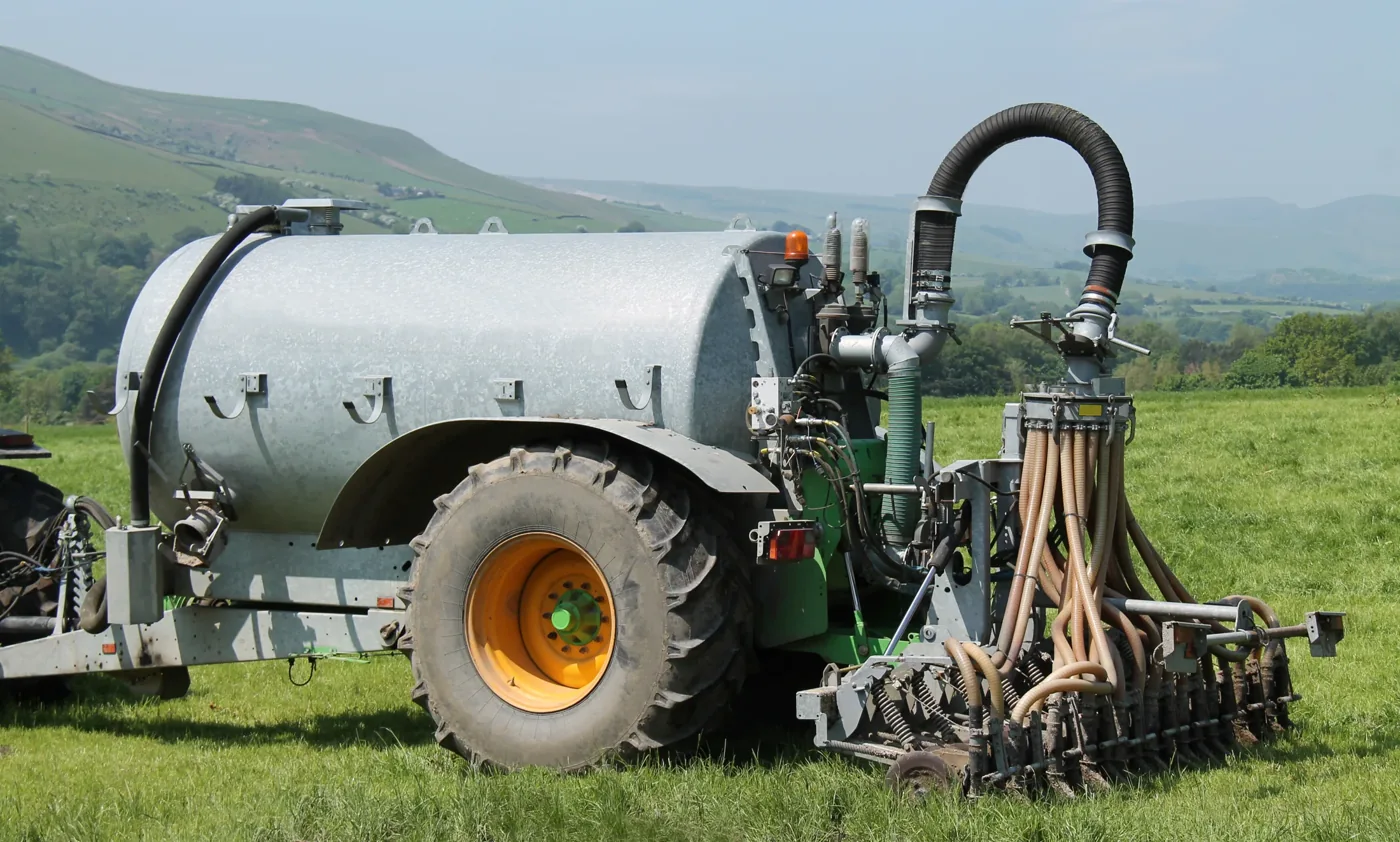
Livestock slurry is liquid or semi-liquid material arising from animal housing and yards. It commonly contains manure, urine, bedding particles and water. Its consistency and solids content can vary according to housing arrangements, cleaning practices and rainfall entering the collection system.
In England, the Environment Agency guidance on slurry storage sets out requirements for storing slurry and associated runoff. The relevant agricultural rules must be considered separately from ordinary sewage arrangements.
Slurry can settle into dense deposits or retain fibrous bedding that changes how readily it can be pumped. A tank described simply as holding dirty water may therefore contain significant quantities of animal material.
Yard washings and contaminated runoff
Yard washings can originate from pressure washing, floor cleaning, vehicle cleaning or rainfall passing across working areas. Their contents depend on the activity and the surfaces involved.
Water from a livestock yard containing animal excreta may form part of the slurry stream under the applicable definition. Washings containing detergents, disinfectants, oils or other process residues may require a different assessment. The presence of chemicals cannot be determined from the appearance of the liquid alone.
Clean rainwater that has not contacted contaminated surfaces should not be treated as equivalent to polluted yard runoff.
Why mixed flows alter handling
When separate liquids enter one tank, the resulting contents must be assessed as the mixture actually present. A tank receiving slurry and washdown water may contain more liquid than expected while still retaining heavy solids at the bottom.
Mixing can also affect the appropriate storage and collection arrangements. Agricultural slurry is subject to particular rules, while certain collected wastes fall under waste duty of care requirements. The waste duty of care code for England and Wales explains the importance of accurate descriptions and identifying authorised waste recipients where that duty applies. It also identifies exclusions, so not every farm liquid should automatically be treated as controlled waste.
These differences are particularly important where older drainage layouts contain undocumented connections between yards, tanks and buildings.
Choose an appropriate collection stream
Before arranging removal, establish what feeds the tank rather than relying on its name. Useful information includes:
- Which buildings, livestock areas and drains connect to the tank.
- Whether washdown chemicals or disinfectants enter the system.
- Whether rainfall contributes significantly to the stored volume.
- Whether the contents include bedding, grit or settled manure.
- Whether previous records identify the liquid and its intended destination.
A farm with separate sewage and slurry tanks can normally describe each stream more clearly than one where several activities share a collection point. Where connections are uncertain, drainage records and the actual operating arrangements should be reviewed before determining the collection route.
When arranging farm and agricultural tank emptying, describe the actual tank contents, including any known washdown chemicals, bedding or heavy deposits. This gives the collection provider more useful information than simply describing the contents as farm wastewater.
The practical distinction is straightforward: identify the source, establish what has entered the liquid and then determine how the resulting contents should be handled. That prevents ordinary sewage, livestock slurry and contaminated washings being treated as interchangeable.