Sewage Holding Tank Emptying

Sewage holding tank emptying removes wastewater stored for collection. The tank itself sets the job: its capacity, what drains into it, how the collection connection is reached and how much usable storage remains. This page covers holding tanks rather than the maintenance of treatment processes.

HomeSewage Holding Tank Emptying

Sewage Holding Tank Emptying quote

A collection plan based on stored volume

A holding tank stores incoming wastewater until it is removed. Its rated capacity is not the same as the volume available immediately before a collection. The current contents, the level at which an alarm operates and the amount that continues to arrive all affect the remaining storage.

Previous collection records give a useful comparison. A tank emptied regularly at similar occupancy should have a recognisable filling pattern. Seasonal opening, extra users or changed working hours can alter that pattern. Recording the collection date and volume helps distinguish a change in use from an unexpected change in inflow.

Gloved operative connecting a reinforced suction hose to a drainage tanker

System type

Holding tanks, septic tanks and treatment plants have different emptying and desludging requirements.

Filling pattern

Capacity, occupancy and unexpected inflow affect when the next collection is needed.

Access from the collection point to the tank

The position of the cover or fixed connection matters as much as the site entrance. Vehicle standing space, the hose run, the distance to the tank and any change in level influence how collection is organised. Barriers, occupied buildings and areas used by other vehicles also affect the available working area.

Tank drawings can help identify compartments, inlet positions and connections. Where a tank has several chambers, the agreed work should say which are included. A level reduction in one chamber does not show that every part of the installation has been emptied.

Emptying and cleaning are different tasks

Emptying removes contents that can be recovered through the agreed pumping arrangement. Deposits on surfaces, settled material behind fittings or residue left on the base may require separate cleaning. A collection described only as emptying should not be assumed to include washing walls or investigating the tank structure.

Where cleaning is also needed, the desired result can be defined separately: removal of a deposit, access to a connection or preparation for a planned inspection. That keeps the collection volume and the additional cleaning work clear.

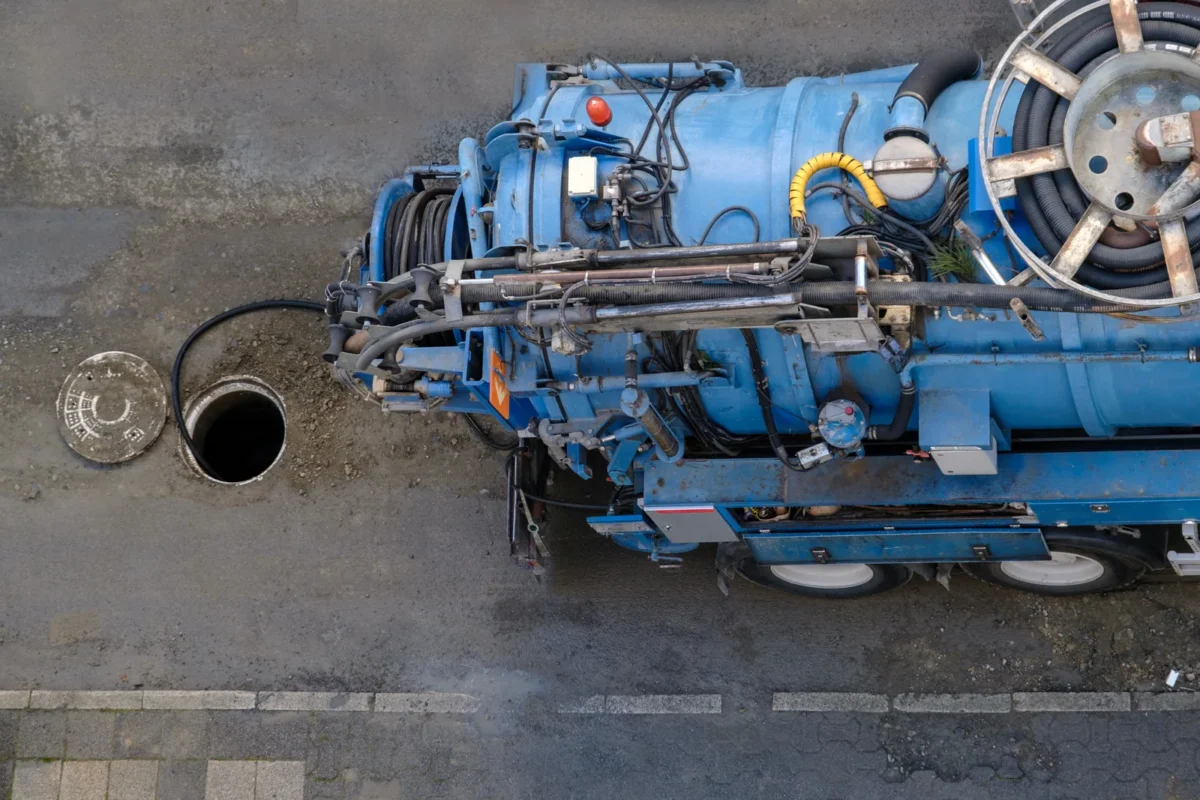
Overhead view of a vacuum tanker and an open drainage access chamber

Sewage tank emptying

Complete the form and we will get back to you.

When the tank fills faster than expected

An unusually short interval between collections is a reason to examine usage and inflow records, rather than proof of a particular fault. Compare occupancy, recent rainfall, meter readings where available and the previous volume removed. These details help focus an investigation of unexpected inflow without treating every high-level incident as the same fault.

Pumping creates storage, but the available time afterwards depends on what continues to enter. A blockage or equipment problem elsewhere in the system needs its own investigation. The cause is not established simply because the level fell during collection.

Records for the waste collection

The collection record should identify the tank, date, material removed and quantity collected. Waste transfer information should describe the waste accurately and identify the parties involved. In England and Wales, non-hazardous waste transfers require appropriate transfer information, while hazardous waste movements generally require consignment notes. The documentation must reflect the waste’s actual classification and destination. In England and Wales, the waste duty of care code explains waste-holder responsibilities and checks on the receiving holder.

Keeping these records with the tank information makes the next collection easier to specify and helps explain changes in the filling pattern. It also separates the work actually completed from any follow-on cleaning or investigation still needed.

Sewage Holding Tank Emptying: common questions

Does emptying include cleaning the tank walls?

Only where wall cleaning has been agreed. Removing stored liquid and cleaning deposits from surfaces are different tasks.

What information helps plan a collection?

The tank location and capacity, current level, tanker access, previous collection details and whether wastewater will continue to arrive.

Why can the next collection be needed sooner?

Higher use or additional inflow can reduce the interval. Compare the collection history and site conditions before deciding what changed.

Sewage Tank Cleaning

Services

Request a quote

Menu

Get a quote