

Underground sewage tank cleaning removes accessible deposits from buried tanks while taking account of the structure, covers, internal compartments and the system’s emptying requirements. Vehicle loading and surrounding groundwater can matter as much as the contents.
Underground Sewage Tank Cleaning
Underground sewage tank cleaning for buried systems where access, groundwater and structural loading need care.
HomeUnderground Sewage Tank CleaningUnderground Sewage Tank Cleaning enquiry
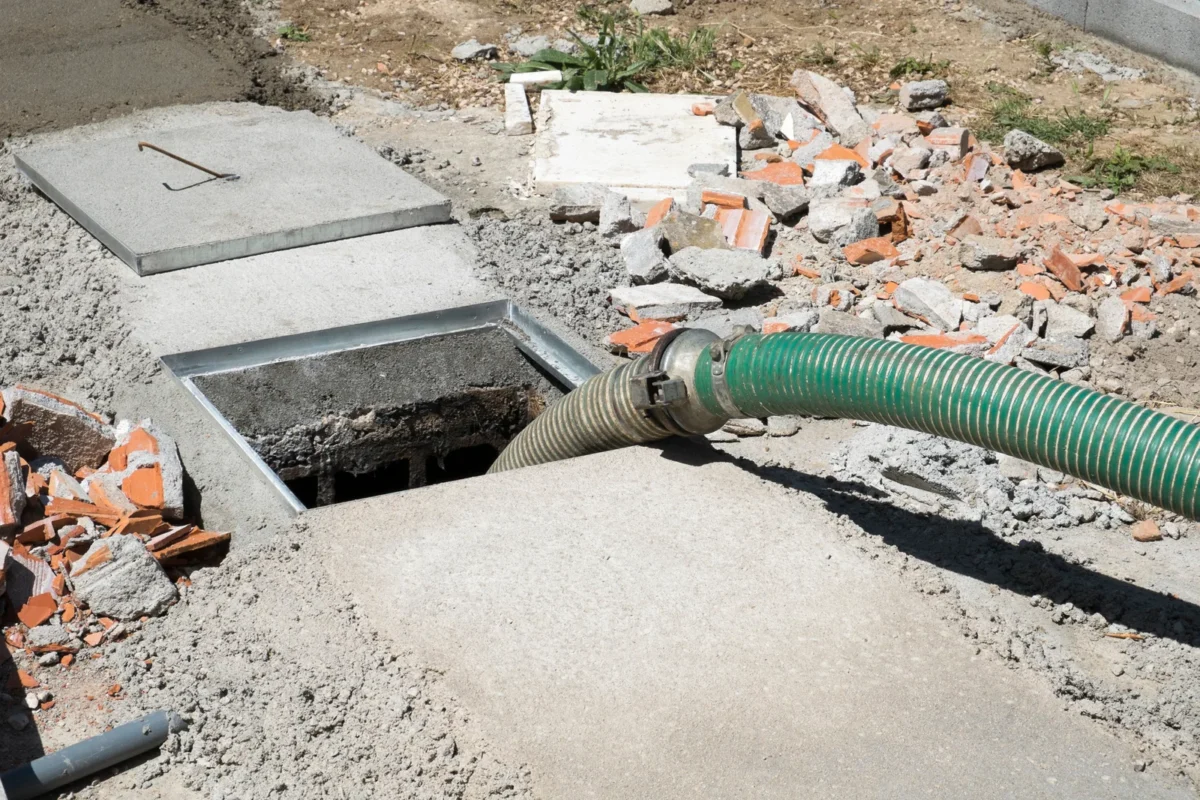
Buried tank access
Tank covers and internal compartments determine which areas can be reached without disturbing the surrounding ground.
Groundwater and loading
Groundwater and vehicle loading can affect how a buried tank is safely emptied and accessed.
Tank location and access openings
A visible cover may lead to only one chamber or to an inspection point rather than the main tank. Existing plans, system information and the arrangement found on site help identify the correct access points without unnecessary disturbance above the buried structure.
Vehicle loading above buried structures
A tanker should not be positioned over a tank or cover unless the ground and structure are suitable for that loading. The standing position, hose route and safe opening of covers need to work together.

Underground sewage tank cleaning
Complete the form and we will get back to you.
Emptying and refill requirements
Some buried treatment systems have a defined post-desludging level or refill procedure, while a sealed storage tank has a different operating purpose. Groundwater conditions can also limit how far a buried vessel should be lowered.
Groundwater and tank condition
Reducing the internal level can change the forces acting on a buried tank when surrounding groundwater is present. Construction and structural limits therefore matter during emptying. Cleaning can reveal accessible walls and fittings, but it does not certify structural integrity or hidden surfaces.
Nearby inspection chambers or drainage points can be mistaken for the tank access. The intended vessel and compartment need to be identified before pumping so material is not recovered from the wrong point.
Underground Sewage Tank Cleaning: common questions
Can the tanker park above the buried tank?
Do not assume so. The ground, tank and covers must be suitable for the vehicle loading.
What if only one compartment can be reached?
The completed work should identify that limit, with any further access assessed for the remaining compartments.
Does an empty underground tank become safe to enter?
No. Emptying does not remove confined-space hazards. Any necessary entry requires separate assessment and controls.
Should every underground tank be completely emptied?
No. The correct procedure depends on tank construction, groundwater and the installed system requirements.
Can cleaning confirm that the buried tank is structurally sound?
No. Cleaning can expose accessible surfaces, but structural integrity requires its own appropriate assessment or testing.