Sewage can return to a basement after the contaminated water has been removed because the original drainage fault remains unresolved. A blocked downstream sewer, overloaded drainage system, defective pumping arrangement or inadequate backflow protection may allow another release through the same basement drain or connected appliance.
Removing sewage restores access to the affected area, but it does not change the conditions that caused wastewater to enter the building. For commercial premises, preventing a repeat incident requires the drainage route to be considered separately from contamination recovery.
Why removing the water does not stop backflow
A basement is often below the level of surrounding ground and may also sit below parts of the receiving drainage network. Its drainage arrangements are therefore particularly important.
When wastewater cannot travel along its normal route, the upstream level can rise. This is sometimes described as sewer surcharge. If the pressure or water level becomes sufficient, sewage may flow backwards towards vulnerable connections.
Potential entry points include basement floor drains, toilets, shower outlets and other fixtures connected to affected pipework.
A previous incident may appear resolved while drainage demand remains low. The same problem can become visible again when occupants use facilities, connected businesses discharge wastewater or heavy rainfall increases flows within the drainage network.
Repeated contamination is therefore not necessarily evidence that the first removal was incomplete. It may be a new release through an unchanged pathway.
Gravity drainage and basement pumping arrangements
Basements connected by gravity
Gravity drainage relies on sufficient fall and an unobstructed route for wastewater to travel towards its receiving sewer or private drainage system.
If a downstream restriction causes wastewater to accumulate, basement outlets can become vulnerable to reverse flow. A blockage may lie within private below-ground drainage, at a connection or further downstream.
The location matters because cleaning the affected room cannot address an obstruction elsewhere in the network.
Basements served by pumps
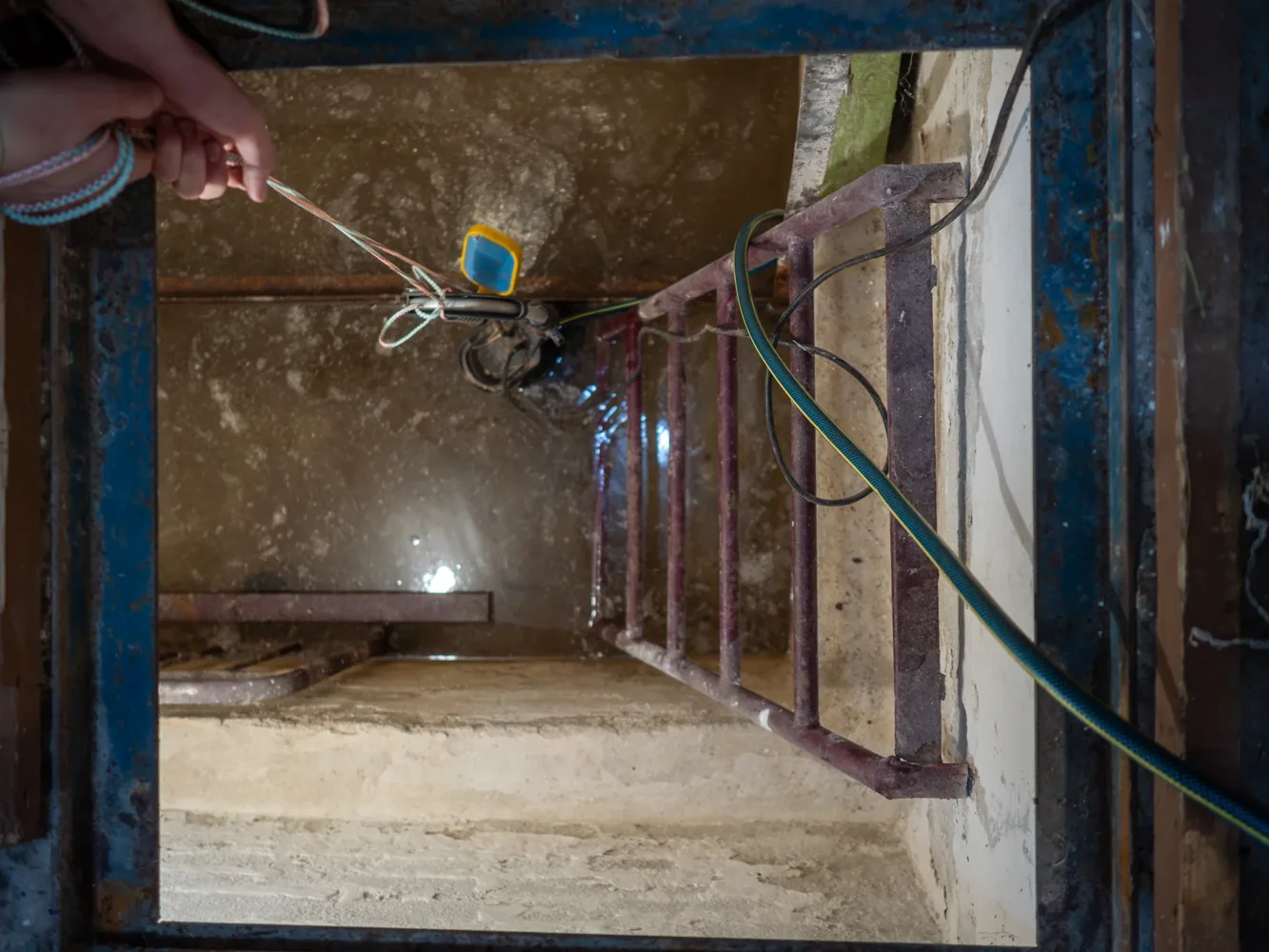
Where fixtures sit too low for suitable gravity discharge, wastewater may collect in a chamber and be transferred through a pumping arrangement.
Several different problems can produce similar symptoms:
- A pump does not operate when the chamber level rises.
- Level controls fail to start or stop pumping correctly.
- An obstruction restricts the discharge line.
- A non-return arrangement fails to prevent unwanted reverse flow.
- Incoming wastewater exceeds the effective transfer capacity.
These possibilities need diagnosis before a particular component is identified for repair or replacement. Pumping-system problems may also require attention to electrical supplies, controls and the condition of the chamber.
Where the issue involves accumulated deposits or chamber contamination, it can help to distinguish cleaning requirements from mechanical servicing.
Cleanup versus corrective drainage work
After a release, basement sewage cleanup addresses the contaminated space. This can involve recovering sewage, dealing with affected materials, cleaning surfaces and assessing remaining moisture.
These activities are separate from restoring the drainage system’s ability to carry wastewater away without another release.
The UK Health Security Agency’s flood recovery guidance explains that contaminated water can present health risks and that recovery includes cleaning and drying affected property. Although written primarily for household flooding, those principles are relevant to understanding why simply removing standing liquid is not the whole recovery process.
Where sewage has affected porous finishes, concealed spaces or electrical installations, these conditions may also influence when commercial rooms can return to use.
Reducing the likelihood of another incident
The appropriate preventative measure depends on how sewage entered the basement. Backflow prevention may be relevant where reverse flow is demonstrated, but the suitability of any device depends on the drainage layout and its intended operation.
Similarly, a pumping fault calls for appropriate equipment investigation rather than assuming that a drainage valve will resolve it.
Building managers should retain the incident timeline, note which outlets released sewage and establish whether the event coincided with heavy rain, high building usage or a pump alarm. These observations help distinguish likely causes without prematurely selecting a repair.
Where contamination has affected a wider drainage network or other rooms, the extent of the release also matters. The separate sewage backup cleaning service explains the broader contamination-cleaning requirement.
Successful recovery means both dealing with the affected premises and resolving the identified route of sewage entry. Completing only one of those tasks leaves an important part of the problem outstanding.